
Rainwater
Rainwater Harvesting for an Off-Grid Cabin
A cabin roof is a water collector you already own. Catching what falls on it turns a rainy afternoon into irrigation, washing, and, with the right treatment chain, drinking water. This guide walks the system from roof to tap, the components that matter at each stage, and the honest safety steps that separate clean rainwater from a health risk.

We may earn a commission from links on this page, at no extra cost to you. As an Amazon Associate we earn from qualifying purchases.
The system, from roof to tap
Every rain harvesting setup, from a single barrel to a full cabin supply, follows the same path. Water hits the roof, runs into the gutters, drops down a downspout, gets diverted into storage, and is later drawn out and used. The job is to keep the water clean at each handoff and to be honest about what makes it drinkable. The flow looks like this:
- Roof, the collection surface
- Gutter screen, to keep leaves and debris out
- Downspout diverter, to send water from the spout into a barrel
- First-flush diverter, to dump the dirtiest first runoff
- Barrel or IBC tote, the storage
- 12V pump, to pressurize stored water at an off-grid cabin
- Inline filter, to polish sediment and taste at the point of use
- Testing and treatment, before any of it is used for drinking
Stage 1: The roof and gutters
Your roof decides how clean the water starts out. Inert metal roofing sheds the cleanest runoff and is the best surface for any potable plans. Asphalt shingles can shed lead and PAHs, and galvanized metal can release zinc and cadmium, so those are fine for irrigation but not ideal for drinking water. Never harvest from a treated, painted, or moss-treated roof. Before water even reaches a downspout, a gutter screen or mesh guard keeps leaves, pine needles, and the bulk of the debris out of the system, which is the easiest maintenance you will ever do.
Six rolls of plastic mesh. Check gutter dimensions; a leaf screen does not disinfect water.
Check Price on AmazonStage 2: Diverting water into a barrel
At the downspout you need a way to send water sideways into storage while letting the overflow continue down the spout. The simplest entry point is a complete barrel-and-diverter package like the Good Ideas Rain Wizard 50-gallon rain barrel with diverter kit, which arrives ready to link to more barrels as you grow. If you would rather upcycle a food-grade drum you already have, the EarthMinded DIY rain barrel diverter kit installs into a 3-by-4-inch downspout with a single hole and automatically sends overflow back down the spout. For a more finished look with a better cold-weather diverter, the Fiskars 58-gallon system with DiverterPro captures more in heavy rain and is easier to clean and winterize.
Good Ideas Rain Wizard 50 Gallon Rain Barrel with Diverter Kit
The exact green barrel-and-diverter package. Check the model and included parts in the results.
Search AmazonEarthMinded DIY Rain Barrel Diverter Kit
A diverter kit for a separately supplied barrel. Confirm downspout compatibility.
Search AmazonFiskars 58 Gallon Rain Barrel System with DiverterPro
The exact 58-gallon Salsa barrel package. Confirm the current seller and included diverter.
Search AmazonStage 3: First flush, the one upgrade not to skip
The first water off the roof in any storm is the dirtiest, carrying everything that settled since the last rain: bird droppings, dust, pollen, and debris. A first-flush diverter kit routes that initial runoff away from your tank and only lets the cleaner later rainfall through. If you have any intention of drinking the water or using it on food crops, this is the single most important component in the whole system, and it costs very little next to what it protects.
First-flush hardware. Size the chamber and pipework for your roof; this does not make rainwater potable.
Check Price on AmazonStage 4: Storage, from a barrel to a tote
A 50 to 58-gallon barrel is plenty for irrigation and light use, and you can link several together. When you want a real cabin reserve, step up to a food-grade IBC tote at 275 or 330 gallons fitted with an IBC tote rainwater adapter that fits the tank outlet. The example below adds a garden-hose valve for irrigation; a screened lid is a separate component. Whatever the size, keep storage sealed, dark, and screened. That keeps mosquitoes out, slows the biofilm and bacteria that grow in stagnant water, and the simple act of using the water regularly beats letting it sit for months.
S60x6 tank thread to a garden-hose valve, for irrigation. Verify the tank thread; no drinking-water certification is established here.
Check Price on Amazon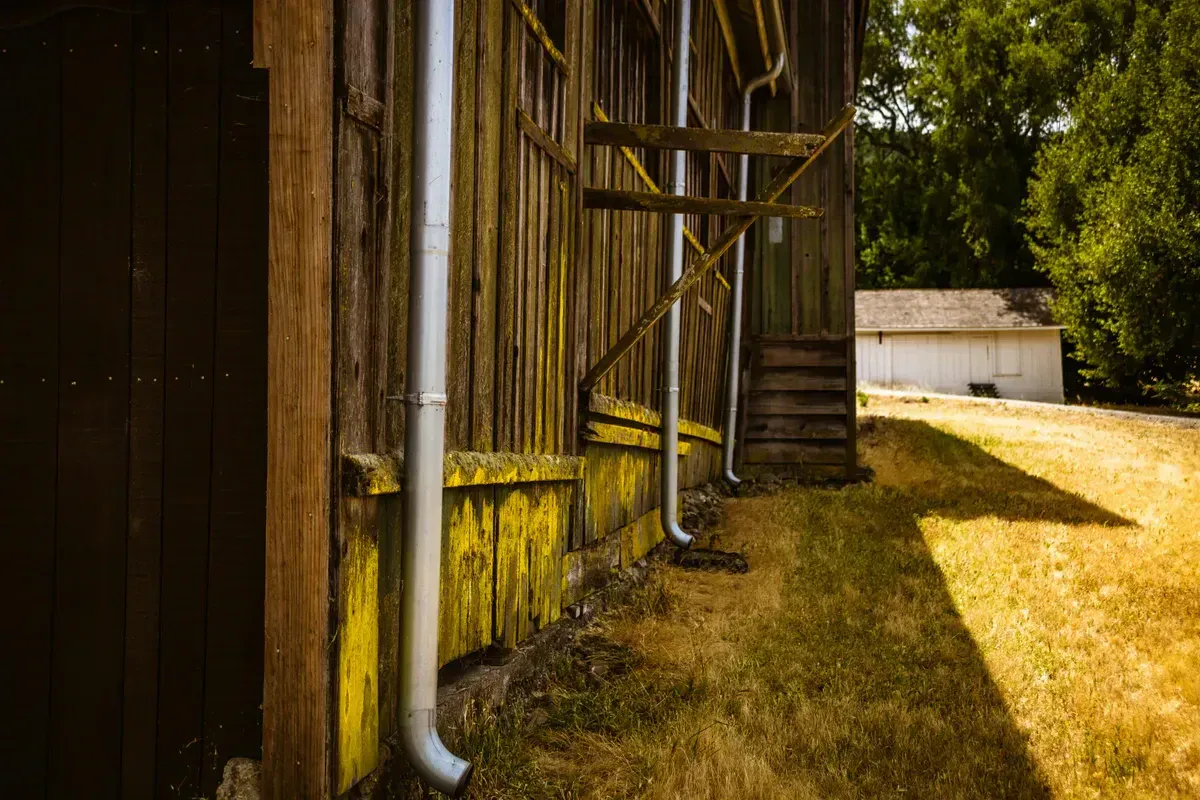
Stage 5: Getting pressure with a 12V pump
Gravity will move barrel water to a low tap, but to run a real faucet or shower at a cabin you need pressure. A 12V demand pump like the Shurflo Revolution 3.0 GPM draws straight from your barrel or tote and pressurizes the line, shutting off automatically around 55 PSI. It runs off the same solar and battery setup that powers the rest of the cabin, self-primes, and can run dry without damage, which is exactly what you want on a storage tank that occasionally empties. Connect it with a food-grade drinking-water hose, not a green garden hose, since standard garden hoses leach chemicals into water meant for use indoors.
Stage 6: Filtration and treatment before drinking
At the point of use, a 20-micron inline filter like the Camco TastePURE knocks down sediment and improves taste on the line, which is plenty for washing, flushing, and irrigation. It is not a purifier, though. Before drinking rainwater, test it and choose treatment for what the test finds. Boiling for one minute (three minutes above 6,500 feet), chlorine dioxide or a certified purifier can handle germs, but boiling and disinfection do not remove most chemicals. Rely on the inline filter alone and you have no treatment at all. This is the same honest distinction we draw in our gravity filter guide.
Putting it together and going further
Start small. A single diverter and barrel on one downspout teaches you how fast your roof fills and what your water actually looks like, all for irrigation-only use where mistakes are cheap. From there, add a first-flush diverter, link more barrels or move to an IBC tote, and only then build out the pump-and-treatment chain for potable use. For long-term storage outside the rain system, see our emergency water storage guide, and for a kit you can carry, the portable and survival filters. The off-grid water guide ties the whole picture together.
The pump and the inline filter are the two parts most cabin systems need to buy first:
Shurflo Revolution 12V RV Water Pump 3.0 GPM Open the Solar Calculator
Related guides
- Best Gravity Water Filters for Off-Grid
- Best Emergency Water Storage Containers
- Best Portable & Survival Water Filters
Frequently Asked Questions
Is collected rainwater safe to drink?
Not automatically. The CDC says rainwater can carry germs like Legionella, Salmonella, E. coli, Giardia, and Cryptosporidium, plus chemicals, even when it looks clean. A first-flush diverter, sediment filter and disinfection do not by themselves make it safe to drink. Test the water and choose treatment for what the test finds, with guidance from your local health department. Boiling and disinfection do not remove most chemicals. Until you know it is safe, use the water for irrigation, washing, or flushing instead.
What does a first-flush diverter do?
It routes the first, dirtiest runoff of each storm away from your tank. That first wash carries the bird droppings, dust, pollen, and roof debris that built up since the last rain, so diverting it means only the cleaner later rainfall reaches your barrel. It is the single most important component if you ever want potable or clean-irrigation water, and it is cheap relative to what it protects.
Does my roof material matter?
Yes, a great deal. Asphalt shingles can shed lead and PAHs, and galvanized metal can release zinc and cadmium into runoff. Avoid harvesting drinking water from treated, painted, or chemically moss-treated roofs entirely. Inert metal roofing or a section of food-safe roofing is best for potable collection, while a shingle roof is usually fine for irrigation-only systems.
Can I just run barrel water through the inline filter and drink it?
No. A 20-micron inline filter like the Camco TastePURE reduces sediment and improves taste, but it does not remove viruses and will not reliably remove bacteria or protozoa. Germs need separate treatment, such as boiling for 1 minute (3 minutes above 6,500 feet), chlorine dioxide, or a certified purifier, and none of those removes most chemicals. Test the water first. The inline filter is a polishing step, not a treatment step.
How do I pressurize stored rainwater at an off-grid cabin?
A 12V demand pump like the Shurflo 3.0 GPM, run off your solar and battery system, draws from the barrel or IBC tote and pressurizes the line, shutting off automatically around 55 PSI. It self-primes and can run dry safely. Connect it with food-grade drinking-water hose rather than a standard garden hose, which can leach chemicals into the water.
Do I need a permit to collect rainwater?
It depends entirely on where you live. Some states and counties actively encourage rainwater harvesting and even offer rebates, while a few regulate or limit it, historically over water-rights concerns. Rules also change over time. Before you build anything beyond a single rain barrel, check with your local or state health department and water authority so you size and permit the system correctly.